
About Course
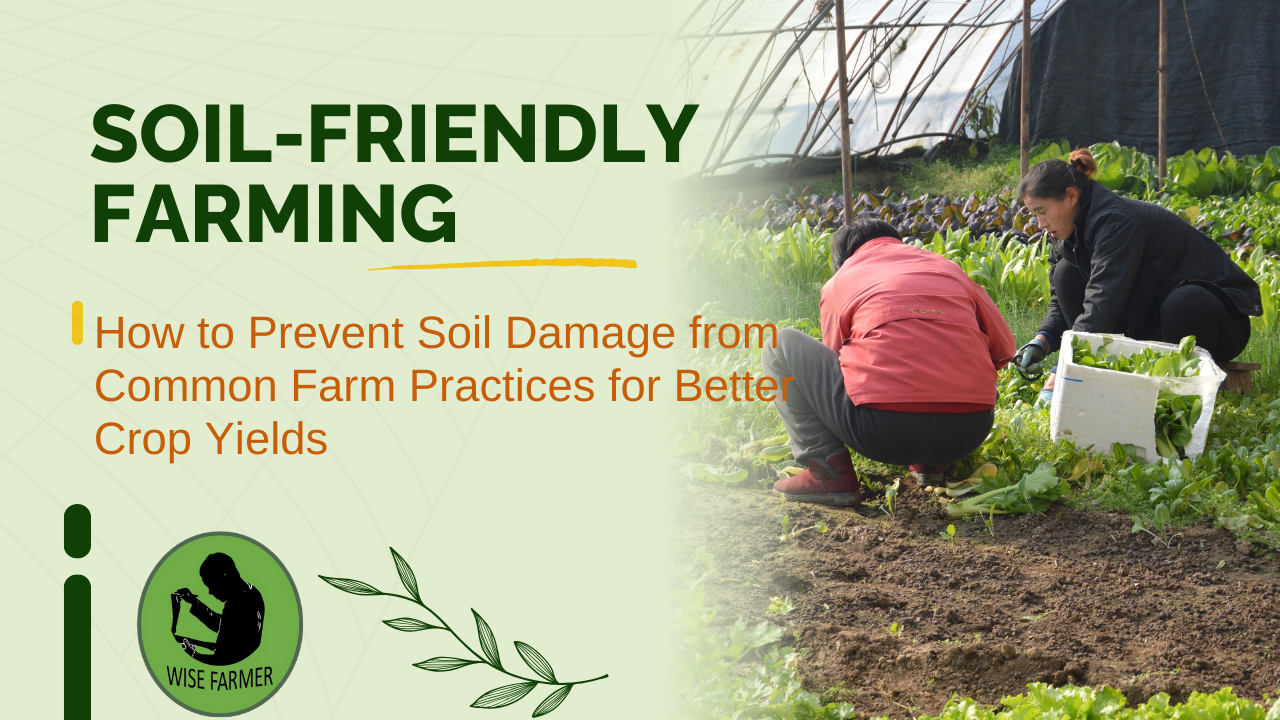
How to Prevent Soil Damage Through Better Farming Practices
Learn how everyday farming decisions can influence soil structure, organic matter, biological activity, water movement and long-term productivity. This practical Wise Farmer course helps growers recognize potentially damaging practices and consider soil-friendly alternatives suited to their farm.
What You Will Learn
- Recognize signs of healthy and degraded soils.
- Understand how repeated or poorly timed tillage may contribute to erosion and compaction, and evaluate ways to reduce these risks.
- Explore how continuous monocropping may influence soil health and when rotations or crop diversity could help.
- Understand why fertilizer and pesticide impacts depend on product choice, dose, timing, application practices and site conditions—not simply whether they are used.
- Examine how burning vegetation or residues can affect soil cover and biological processes.
- Develop a prioritized soil-friendly farming action plan using observations and appropriate soil tests.
Course Structure
Part 1 — Healthy Soil and Damaged Soil: Recognize indicators of soil condition. Part 2 — Common Farming Practices: Review tillage, monocropping, fertilizer and pesticide management, and burning. Finish with the course quiz.
Start with Your Soil-Friendly Farming Worksheet
Download the Wise Farmer Soil-Friendly Farming Plan from the first lesson and use it throughout the course. Identify practices currently used on your farm, possible concerns, practical alternatives, and what you need to monitor before and after making changes. Revisit the worksheet as each topic is covered.
Who Should Take This Course?
Farmers, farm managers, gardeners, agricultural extension workers, and agribusiness owners who want to protect their soil and make better-informed decisions.
Your Practical Learning Outcome
Complete a preliminary soil management improvement plan identifying the practices to review, feasible changes to test, and how to evaluate results. Recommendations should account for crop, soil type, climate, resources and local agronomic guidance; improved yields are not guaranteed.


Course Content
Part 1 – Introduction and Practical Activity
-
Practical Activity: Your Soil-Friendly Farming Action Plan
Part 2 – Healthy Soil and Damaged Soil
Part 3 – How to Prevent Common Practices from Damaging your Soil
Course Quiz
Student Ratings & Reviews
